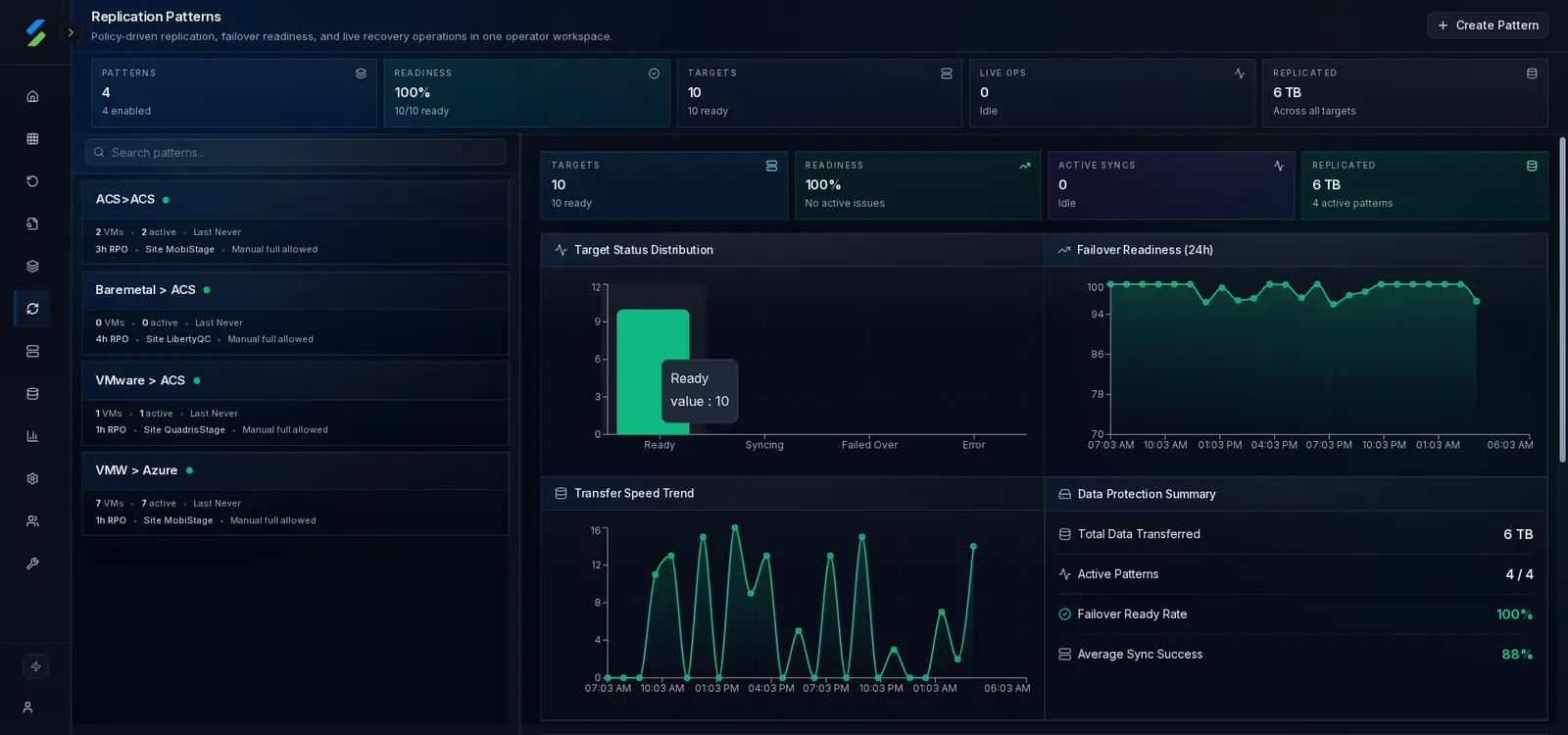
VMware Migration Without Leaving Protection Behind.
Sendense migrates VMware workloads to Nutanix AHV, CloudStack, OSSEA or Azure with ongoing replication, controlled cut-over and backup and disaster recovery protection continuing after landing.
Keep the destination current before the migration window, prepare each workload for the new platform, coordinate the final change and retain Sendense backup, validation evidence, EBA retention and recovery workflows after cutover.
Keep
Backup History
Cut
VMware Dependency
Boost
Price Performance
Protect
Destination DR
Keeping VMware in the estate? Review VMware backup. Choosing Nutanix? Explore the VMware to Nutanix AHV migration. CloudStack selected? Follow the focused VMware to CloudStack migration path.
Business Case
The Case to Move Is Stronger than Cost Alone.
CloudStack and OSSEA can lower the platform cost base and improve price-performance. Sendense adds the missing enterprise protection layer that makes the move operationally defensible.
Lower Platform Cost
Move production and DR away from VMware licensing pressure while keeping a credible protection model around the new estate.
Better Price-Performance
CloudStack and OSSEA can run on efficient KVM/open infrastructure, letting teams spend budget on useful capacity and storage instead of platform tax.
Planned Protection Continuity
Plan destination backup, EBA retention, validation and recovery policies during the migration, then enroll workloads after cutover.
History Preserved
Restore points, validation evidence and audit trail remain part of the recovery story rather than being stranded at the migration boundary.
Cost and Performance
Savings Become More Compelling When Protection Is Solved.
Moving to CloudStack or OSSEA is not only a licensing exercise. It can unlock better control over hardware, storage and workload placement, while Sendense keeps DR, backup and restore outcomes credible enough for production adoption.
Savings and performance improvements vary by estate, contracts, target hardware, storage design and workload profile.
Before
Traditional stack
VMware DR
Full licensing
Veeam/Commvault
Enterprise backup
VMware
Production
Separate
Production, backup and DR layers
Production, backup and DR all carry legacy platform weight.
Optimize
Smarter DR
No VMware DR
Layer retired
Selected platform
DR target
Sendense
Backup + replication
VMware
Production only
Consolidate
Selected DR and protection layers
DR moves to open infrastructure while Sendense protects the estate.
Exit
Complete migration
No VMware DR
Layer retired
No legacy backup
Layer retired
Sendense
Backup + DR
Selected platform
Production
Replace
Selected production and protection layers
The selected destination takes production; Sendense protection is enrolled after cutover.
Destination Choices
Move to the Platform That Fits the Next Decade.
Sendense lets the destination decision be about economics, performance and operations, not fear that enterprise backup and DR will disappear.
Enterprise Cloud Target
CloudStack
A practical VMware replacement for teams that want open infrastructure, tenant controls and CloudStack-aware operations without giving up enterprise backup.
Full VMware Migration Target
Nutanix AHV
Migrate VMware workloads to Nutanix AHV with ongoing synchronization, controlled cutover and Sendense protection continuing through direct Prism Element integration.
Open Infrastructure Landing Zone
OSSEA
A destination for organizations that want open cloud economics, predictable operations and Sendense-backed protection around migrated workloads.
Cloud Recovery Target
Azure
Use Azure selectively for DR, cloud recovery and staged migration while keeping the Sendense recovery path consistent.
Destination Protection
The Missing Enterprise Layer Is No Longer Missing.
CloudStack adoption used to be held back by backup and DR concerns. Sendense keeps conversion and the planned destination protection policies in one migration programme, then enrolls promoted workloads after cutover.
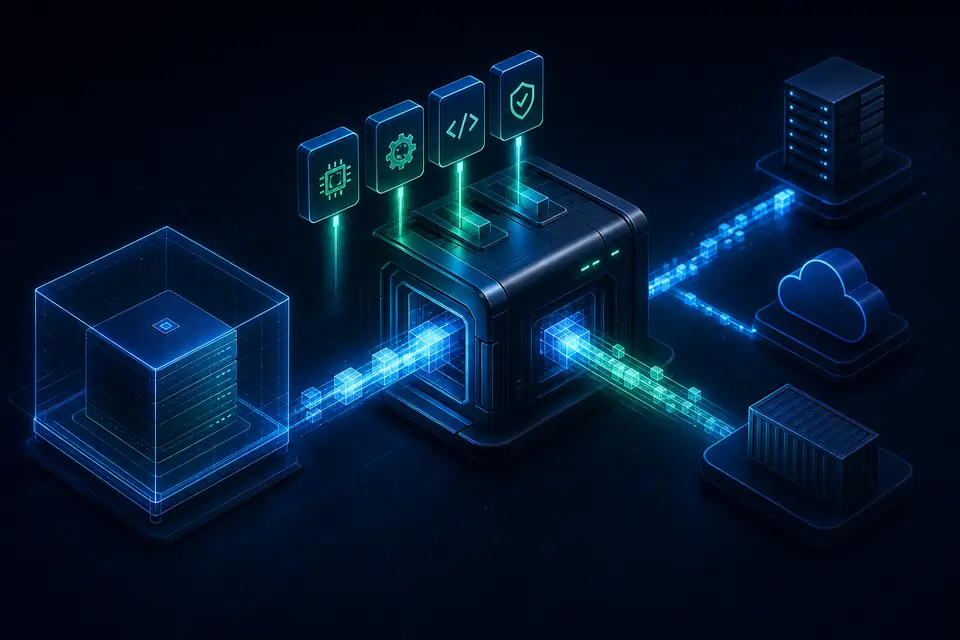
Conversion Is Built into the Move
Drivers, boot behavior and target metadata are prepared as part of the migration workflow, not as a manual post-project.

Destination Restores Stay Fast
EBA keeps repository efficiency, direct restore workflows and retention controls attached after landing.
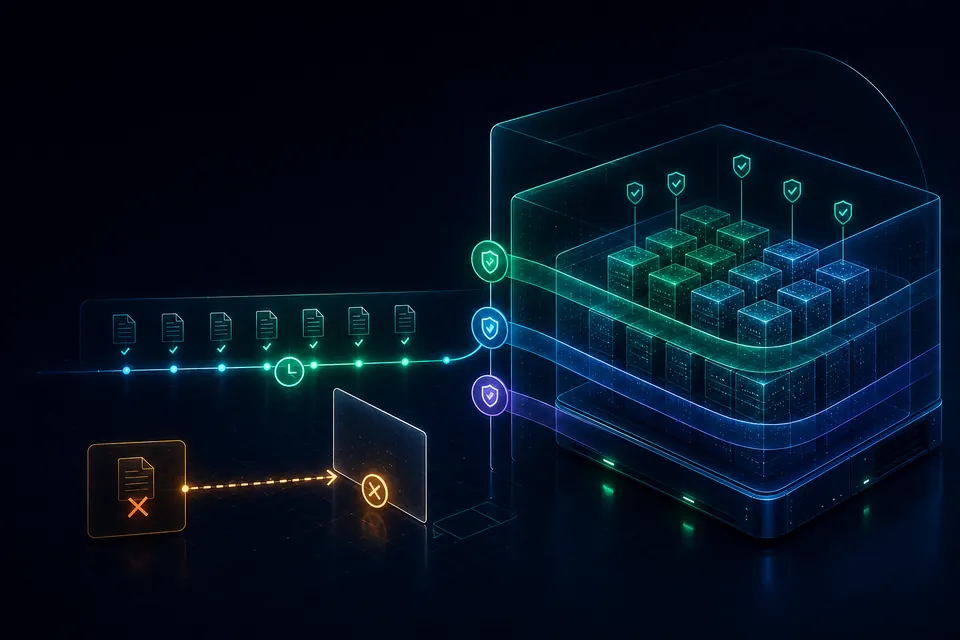
Enterprise Protection Follows
Immutable retention, legal hold, validation evidence and DR readiness remove the classic blocker to CloudStack adoption.
From VMware Estate to Protected Destination.
The path does not end at cutover. Sendense enrolls the promoted workload into the planned protection policies so it remains recoverable and auditable in day-two operations.
Assess
Map VMware workloads, backup history, RPO/RTO expectations and destination candidates.
Protect
Capture VMware restore points and keep lineage available before workloads move.
Sync
Hot sync reduces the migration window by keeping the destination close to the source.
Convert
Prepare target boot behavior, driver injection and platform metadata.
Land
Start workloads on Nutanix AHV, CloudStack, OSSEA or Azure, then enroll them in the planned Sendense protection policies.
Govern
Continue backup, retention, DR testing and recovery evidence on the new platform.
Less
VMware Spend
Reduce production and DR dependency on VMware licensing.
More
Useful Capacity
Redirect budget into compute, storage and open infrastructure.
Planned
Destination Protection
Backup, DR, validation and retention are prepared for enrollment after landing.
Preserved
History Continuity
Lineage and recovery evidence survive the move.
VMware Migration FAQs
FAQs for VMware Migration.
Short answers about cost, performance, CloudStack adoption, OSSEA destinations and preserved protection.
01Why Does Sendense Make VMware Migration More Practical?
Sendense combines replication, conversion, controlled cutover, backup history, EBA repository protection, validation evidence and DR workflows so Nutanix AHV, CloudStack, OSSEA or Azure can become a protected destination.
02Can Sendense Migrate VMware VMs to Nutanix AHV?
Yes. Sendense uses ongoing replication to keep Nutanix AHV current before a controlled VMware cutover, then continues backup, EBA retention and recovery operations through direct Prism Element integration without requiring Prism Central.
03Can Moving to CloudStack or OSSEA Reduce Cost?
Yes, many teams use CloudStack or OSSEA to reduce VMware licensing exposure and improve price-performance on open infrastructure. Actual savings depend on workload profile, hardware, contracts, support model and storage design.
04Does the Destination Have Enterprise Data Protection?
Yes. Teams can plan backup, EBA retention, immutability, validation evidence and DR policies as part of the migration, then enroll promoted workloads after cutover. Exact timing and policies are confirmed during the migration assessment.
05Do VMware Restore Points Survive the Migration?
Sendense is designed to preserve recovery lineage across the migration boundary so operators do not start from a blank slate after a workload lands on Nutanix AHV, CloudStack, OSSEA or Azure.
06Can Sendense Help with Performance During VMware Migration?
Sendense helps by keeping destinations synchronized before cutover, preparing target boot requirements and protecting workloads directly on the destination. CloudStack or OSSEA performance gains depend on the target hardware, storage and workload placement.
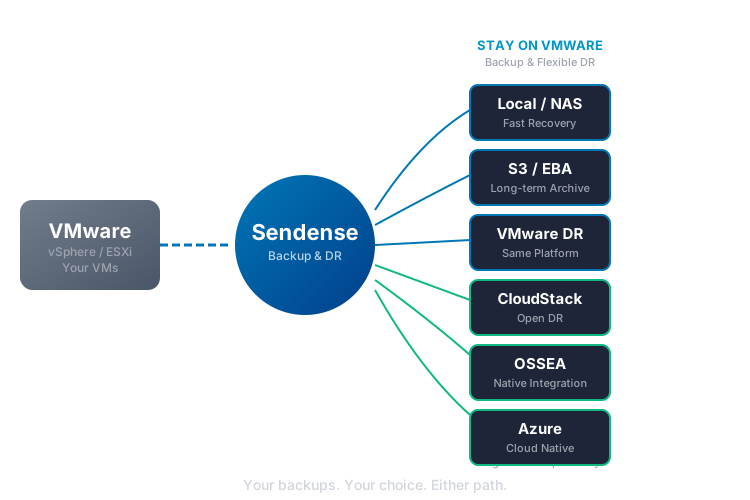
Plan VMware Migration with Protection Included.
Review your VMware estate, target requirements, Nutanix AHV, CloudStack, OSSEA or Azure landing path and destination protection model with Sendense.