Scale your backup and recovery operation from a secure easy to use control panel
SNA edge nodes, SHA hub repositories and SCA fleet control, separated for security and scale.
Sendense is built around clean operating roles: protect data near the workload, govern recovery from a secure hub and manage distributed estates without opening remote sites to inbound management.
SNA
Edge Data Plane
SHA
Hub Repository
SCA
Fleet Control
443
Outbound Path
One Architecture. Three Clear Responsibilities.
Sendense separates edge capture, hub orchestration and fleet control so each layer can scale and be secured on its own terms.
Data Plane
SNA nodes remain close to the workloads and move only the protected data path they own.
Control Plane
SHA hubs coordinate backup, validation, restore and repository operations from the secure zone.
Management Plane
SCA gives operators a fleet view without turning every site into a full control surface.
Evidence Plane
Proof, audit records and validation state are produced beside recovery workflows, not as a separate project.
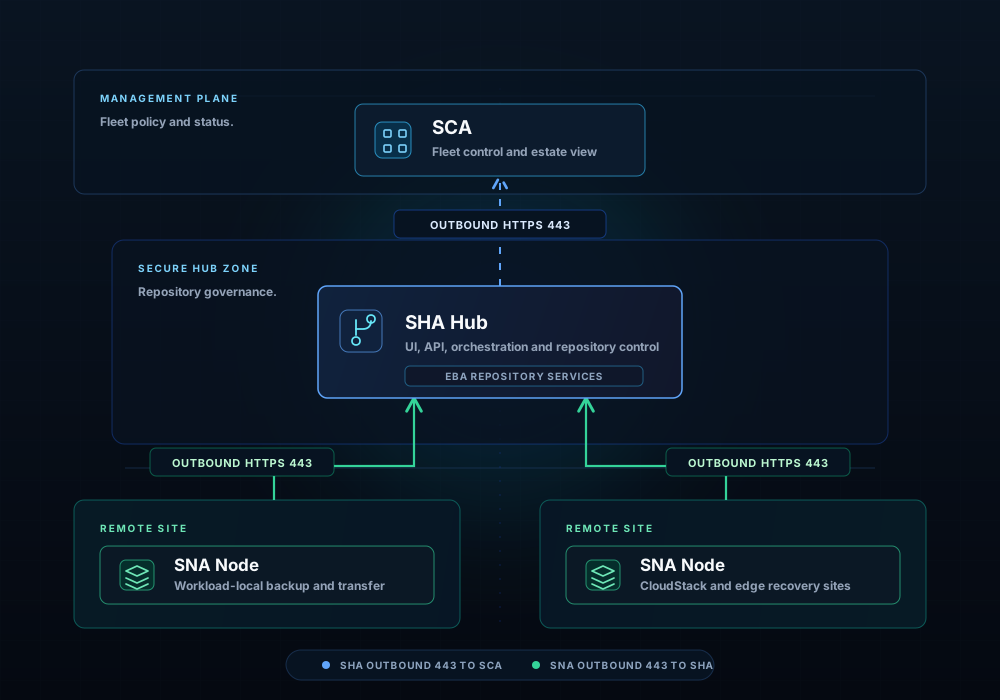
System Topology
Control, data and management planes separated by role.
Component Roles
The Stack Is Modular By Design.
Each role has a narrow operating surface. That makes small deployments simple, and larger multi-site or service provider deployments easier to reason about.
Remote Site Worker
SNA Node
Lives close to protected workloads. It talks to hypervisors, captures changed blocks, encrypts locally and initiates outbound connectivity to the hub.
Repository And Orchestration
SHA Hub
Runs the secure hub zone. It coordinates jobs, stores EBA repositories, records evidence and keeps repository paths away from production networks.
Fleet And Tenant Management
SCA Control
Sits above multiple hubs for multi-customer and distributed deployments. It centralizes telemetry, licensing and multi-tenant operations.
Deploy Fast, Then Let The Roles Do Their Work.
SNA enrolment, inventory discovery, block capture, validation and recovery all stay attached to the architecture instead of becoming separate operational scripts.
Deploy
Drop an SNA template into the site that owns the workload.
Pair
Enroll the node with a controlled pairing token and site policy.
Discover
Inventory is discovered through scoped platform credentials.
Protect
Changed blocks move through the outbound path into the hub.
Validate
Proof, boot and clean-room workflows confirm recovery readiness.
Recover
Operators restore, browse or migrate from the repository path.
Outbound-Only Remote Sites
The Site Initiates The Path Back To The Hub.
Remote nodes do not need to expose broad inbound management surfaces. The SNA owns the local workload conversation and initiates the protected path back to the secure SHA zone.
Remote Site
SNA Node
Captures and encrypts changed blocks near the workload.
Secure Hub
SHA And EBA
Orchestrates recovery and governs repository data.
Deployment Patterns
Start Compact. Expand Without Redesigning.
The same architecture can support a single protected estate, distributed enterprise recovery or a provider fleet with tenant-aware operations.
Single Secure Hub
A compact SHA deployment can protect a local estate while keeping repository and orchestration roles cleanly separated.
Distributed Sites
Remote SNAs protect branch, edge and datacenter workloads through outbound paths back to the hub.
Service Provider Fleet
SCA gives operators tenant-aware visibility above multiple hubs and protected customer estates in multi-customer and distributed deployments.
Architecture FAQs
Architecture FAQs.
Short answers for teams evaluating SNA, SHA, SCA, outbound-only site paths and EBA repository placement.
01What Is The Sendense Platform Architecture?
Sendense separates SNA, SHA and SCA roles. SNA nodes sit near protected workloads, SHA hubs orchestrate recovery and repository operations, and SCA provides fleet-level control across multiple hubs.
02Why Separate SNA, SHA And SCA Roles?
The separation keeps data capture, repository control and fleet management from collapsing into one large blast radius. It also lets deployments scale from a single hub to distributed enterprise or service provider estates.
03Does Sendense Need Inbound Firewall Rules At Remote Sites?
Remote SNA nodes are designed to initiate outbound connectivity to the hub, commonly over port 443, so remote protected sites do not need broad inbound management exposure.
04Can SHA And SNA Run Together?
Yes. Smaller deployments can combine roles where that is appropriate, while larger estates can split SNA edge nodes, SHA hubs and SCA control for scale and isolation.
05How Does Architecture Relate To EBA?
EBA is the repository foundation that sits in the protected hub path. SHA coordinates repository operations, while SNA nodes feed protected changed blocks into that repository model.
Build The Recovery Architecture Before Scale Forces It.
Review your site topology, repository placement and fleet model with a Sendense architecture session.