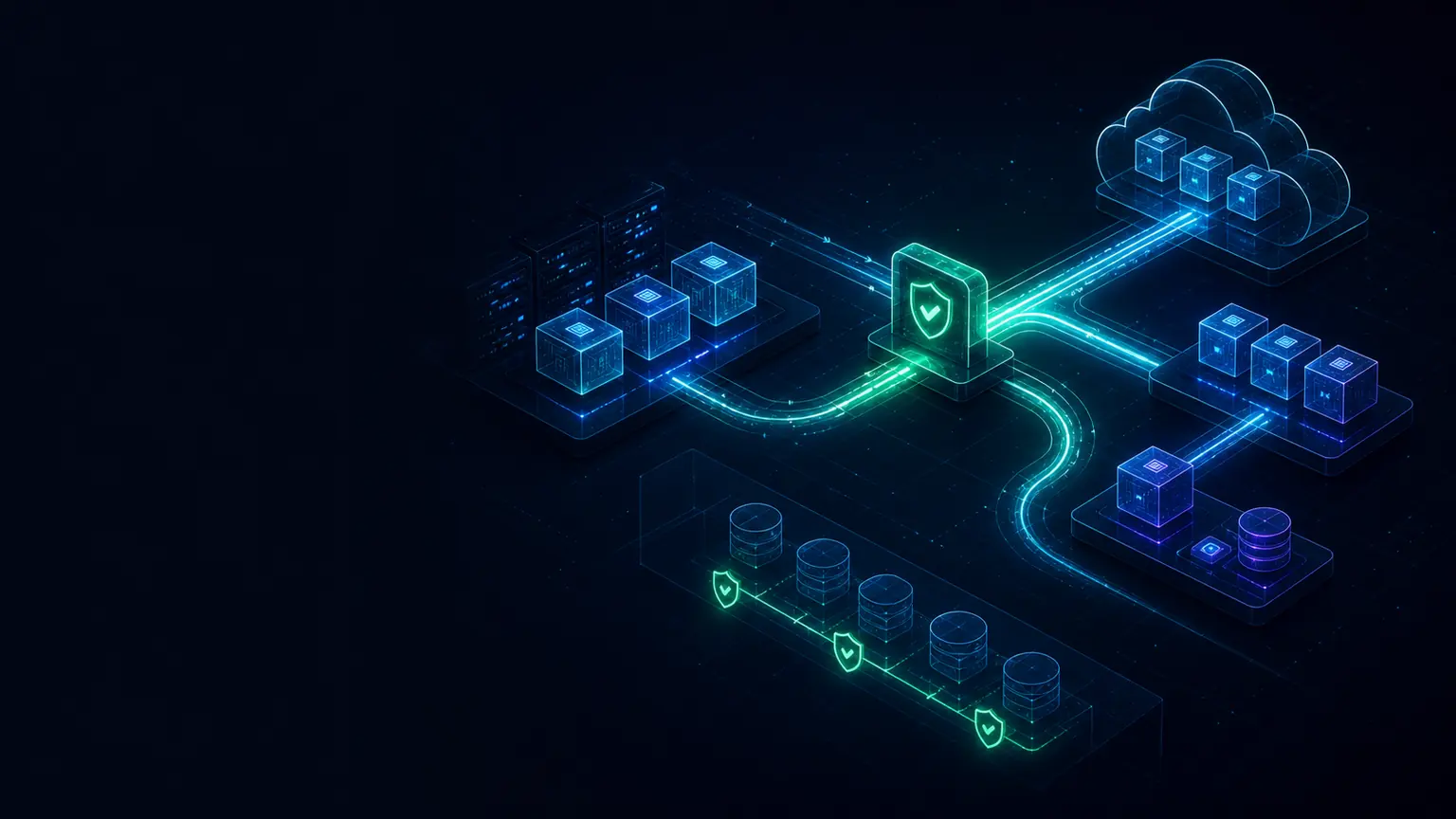
Move Workloads Without Losing Protection.
Hot sync, platform conversion and controlled cutover across VMware, Nutanix AHV, CloudStack, OSSEA and Azure.
Sendense turns migration into a recovery-controlled workflow: keep destinations close, convert the VM at the platform boundary, cut over in planned waves and keep backup protection attached after landing. Nutanix AHV is a full production source and target through direct Prism Element; Sendense does not use or require Prism Central.
Hot
Continuous Sync
VM
Driver Conversion
Wave
Planned Cutover
Proof
Protection Carries
Platform Path
Named Platforms. Controlled Direction.
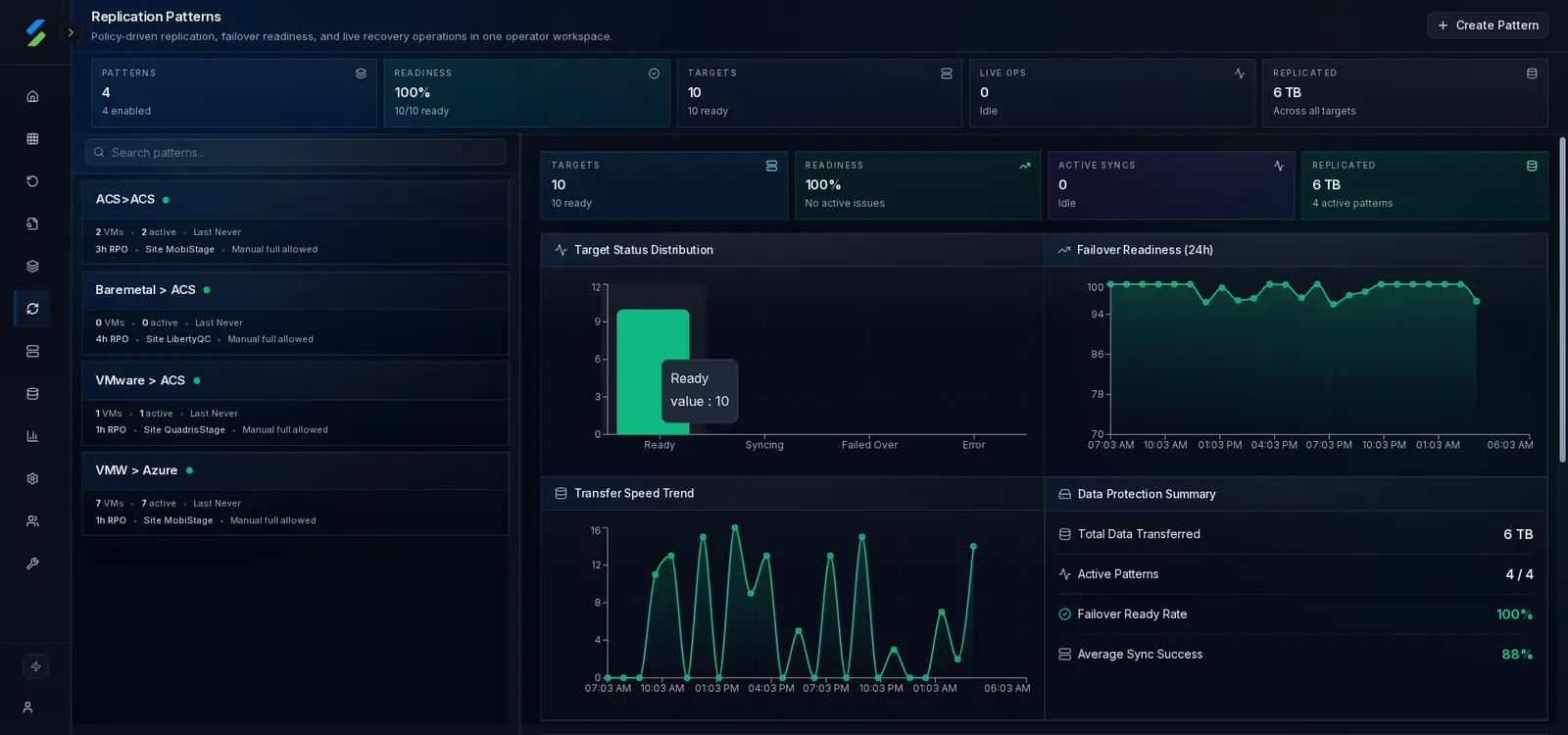
Replication patterns keep mobility policy, failover readiness and live recovery operations in one workspace. The migration path stays connected to platform conversion and destination protection. Nutanix AHV can sit on either side through direct Prism Element, with the same recovery points, EBA and proof benefits as VMware and CloudStack.
VMware
vSphere And ESXi
Nutanix AHV
Direct Prism Element — Source And Target; No Prism Central
CloudStack
KVM And CloudStack-Native Targets
OSSEA
Open Infrastructure Landing Zone
Azure
Cloud VM Recovery Target
Policy-Driven Replication
Failover Readiness
Live Recovery Ops
Migration Data Path
From Source Blocks To Protected Destination.
The same workflow that moves the VM also prepares the boot path, preserves recovery context and keeps destination protection ready.
Capture
Changed blocks and recovery metadata are captured from the source platform.
Hot Sync
Continuous replication keeps the destination close while production keeps running.
Convert
Platform drivers, boot behavior and target metadata are prepared for the destination.
Validate
Cutover readiness can be checked before the migration window commits.
Cut Over
The final delta is applied and workloads boot on the selected platform.
Protect
Backup protection and recovery evidence continue from the destination path.
Cutover Runs As A Planned Sequence.
Hot sync does the heavy lifting before the window. The cutover sequence finishes the delta, prepares platform-specific boot requirements and starts the workload on the destination.
Sync
01Destination Kept Close
Changed blocks flow to the target before the cutover window begins.
Freeze
02Final Delta Applied
The source is paused or coordinated while the last changes are committed.
Convert
03Drivers And Boot Path Prepared
Platform-specific components are injected before the workload starts.
Start
04Destination Workload Runs
The VM boots on the target platform with protection ready to continue.
Mobility Controls
Move The Workload And The Operating Context.
Successful mobility keeps the target bootable, governed and protected. These are not separate projects bolted on after migration.

Hot Sync Before Cutover
Keep destination workloads close to source state before the migration window, then apply the final delta when you are ready.

Automatic Platform Conversion
Prepare boot paths, drivers and target metadata so VMs land cleanly on CloudStack, OSSEA, Azure or other supported targets.
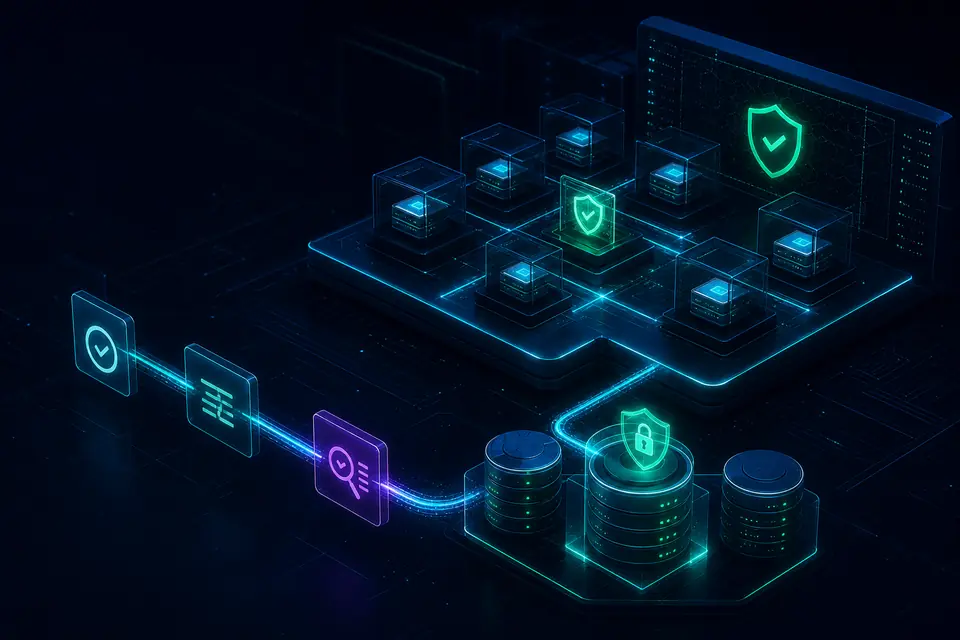
Protected From Day One
Migration lands inside the Sendense recovery path, with backup lineage, EBA retention and validation evidence still part of operations.
Land On Better Protection, Not A Fresh Blind Spot.
Platform migration should not reset backup posture. Sendense keeps recovery history, validation workflows and EBA retention connected to the destination.
Destination Recovery Plane
Protection State Moves With The Workload.
After cutover, the destination workload should already be inside a backup, proof and retention model rather than waiting for a new project to be designed.
Lineage
Recovery History Carries Forward
The migration does not have to create a blind spot between old platform and new platform.
Validate
Proof Can Follow The Workload
Recovery Validation and Clean Room workflows help confirm that migrated workloads can still be defended and recovered.
Retain
EBA Protects The Destination Path
Immutable retention, encrypted repository storage and controlled archive behavior remain part of the target operating model.
Migration Scenarios
Common Moves Without Custom One-Off Projects.
Use the same mobility foundation for bidirectional Nutanix AHV moves, VMware exit, cloud DR, repatriation and site consolidation instead of rebuilding migration tooling for every target.
VMware to CloudStack
Replicate VMware workloads into KVM-backed CloudStack with conversion, validation, controlled cutover and continuing protection handled together.
Nutanix AHV To Supported Platforms
Move protected Nutanix AHV workloads to VMware, CloudStack, OSSEA or Azure while EBA history and recovery proof remain part of the workflow.
Supported Platforms To Nutanix AHV
Move protected VMware, CloudStack, OSSEA or Azure workloads into Nutanix AHV through direct Prism Element. Sendense does not use or require Prism Central.
Cloud DR
Keep on-prem workloads synchronized to Azure for disaster recovery without turning every target into full-time compute.
Cloud Repatriation
Bring workloads back from cloud platforms into OSSEA or CloudStack while keeping recovery operations visible.
Datacenter Consolidation
Move workloads between sites in orchestrated waves while recovery points and evidence stay attached to the process.
Mobility FAQs
FAQs for Workload Mobility.
Practical answers for teams evaluating Nutanix AHV mobility, VM migration, VMware exit, platform conversion and protected destination recovery.
01What Is Sendense Workload Mobility?
Sendense Workload Mobility moves protected VM workloads between VMware, Nutanix AHV, CloudStack, OSSEA and Azure. It combines hot sync, platform conversion, controlled cutover and backup continuity in one recovery workflow.
02Can Sendense Help With VMware Exit Projects?
Yes. Sendense can move VMware workloads to Nutanix AHV, CloudStack, OSSEA or other supported targets while preserving recovery operations and preparing platform-specific drivers and metadata during cutover.
03How Does Nutanix AHV Mobility Work Without Prism Central?
Sendense integrates directly with Prism Element by design and does not use or require Prism Central. Nutanix AHV is a full production source and target for VMware, Apache CloudStack, OSSEA and Azure replication and migration paths, with the same EBA repository and recovery-proof benefits as VMware and CloudStack.
04Does Workload Mobility Preserve Backup Protection?
Yes. Mobility is designed to land workloads inside the Sendense protection path, so backup lineage, EBA retention, validation evidence and recovery workflows can continue after migration.
05How Does Hot Sync Reduce Cutover Time?
Hot sync keeps the destination close to the source before the migration window. During cutover, only the final delta and platform conversion work remain, reducing the time the workload needs to be paused.
06Which Platforms Are Supported?
The mobility page covers VMware, Nutanix AHV, CloudStack, OSSEA and Azure paths. Nutanix AHV supports movement to and from every other listed virtual platform through direct Prism Element; Sendense does not use or require Prism Central.
Plan The Move Before The Platform Forces It.
Review your Nutanix AHV, VMware exit, cloud DR or repatriation path with a Sendense architecture session built around cutover, conversion and protection continuity.